
A stable, damped base for balances and precision instruments that lose accuracy to everyday vibration. Specified against the instrument and the room.
An analytical balance or a precision instrument can be thrown off by footfall, door slams and nearby equipment. An anti-vibration table isolates the work surface from that movement. We build a heavy, damped base and fit a damped steel or granite top, then size it to the instrument weight and the vibration level on site. For the most sensitive instruments we can add active isolation — we will tell you when that level is actually needed.
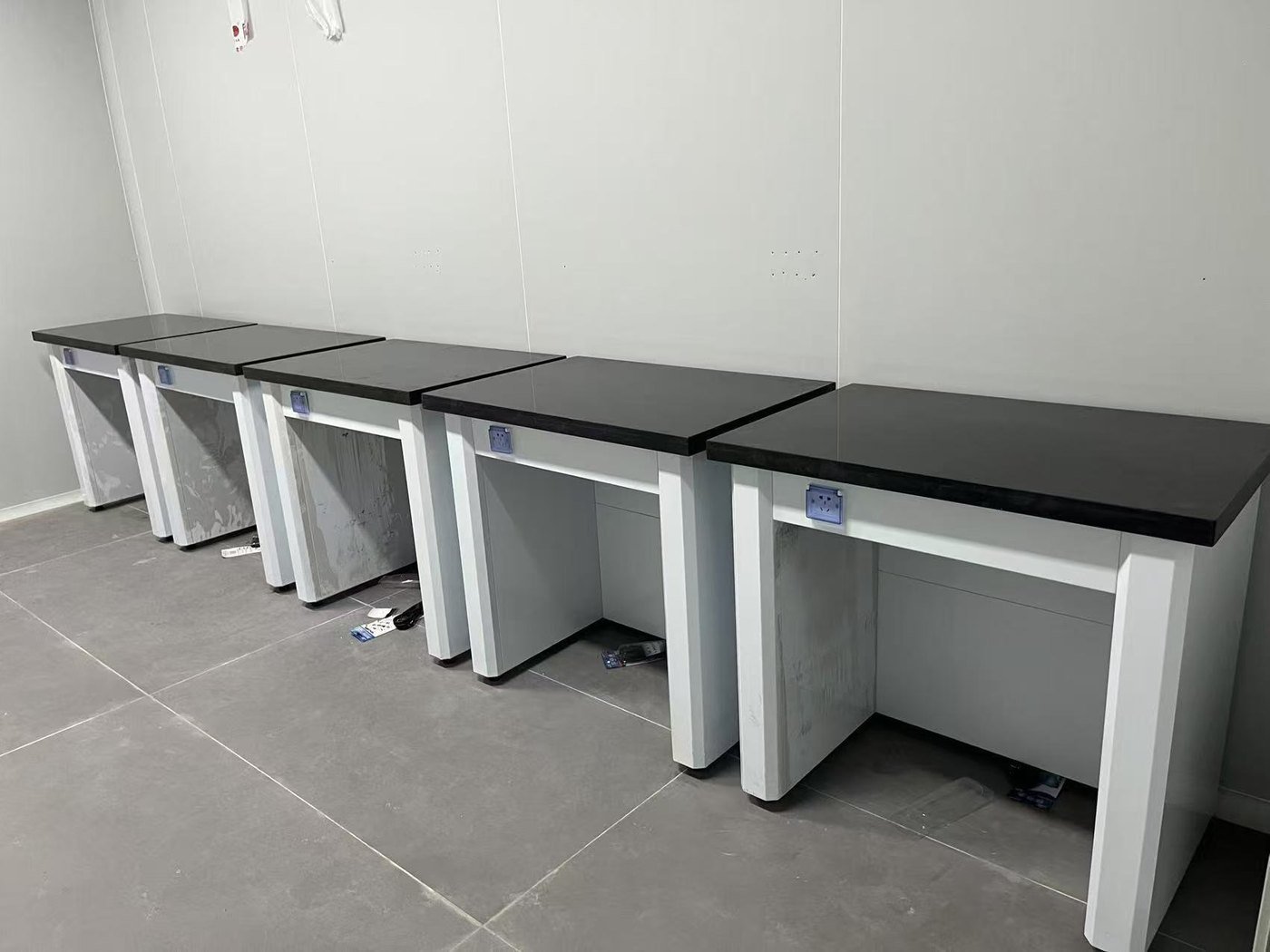
These are standard values; anything here can be changed to suit your drawings or local code. A bench run is usually specified with fume hoods and storage cabinets in the same finish.
| Top | Damped steel plate or granite, thickness per instrument load |
|---|---|
| Frame | Heavy steel box section, damped and powder coated |
| Isolation | Passive damped feet standard; active isolation available |
| Levelling | Precision adjustable levelling feet |
| Top size | Standard 900x750 / 1200x750 mm; custom sizes accepted |
| Load | Specified against your instrument — confirm in the enquiry |
| Finish | Powder-coated frame; top per selected material |
| Packing | Crated, protected for fragile surfaces |
Most balance and general instrument work is well served by a passive damped table. Active isolation is justified for very sensitive equipment or a noisy room — send us the instrument model and we will advise honestly.
Granite is dense and dimensionally stable, so it resists movement and temperature change better than a light steel top. It is the usual choice for high-precision balances.
The frame colour can be matched to your bench run. The top is specified by performance rather than colour, since it is there to protect the instrument.
Send a DWG, PDF or a photo with dimensions. You get shop drawings, a material schedule and a factory-direct price.
Send Your Drawings