
A 20 mm ceramic worktop that stands up to scratching, heat and regular cleaning, a hard easy-to-clean surface for research and analytical benches.
Ceramic slabs offer a very hard, heat-resistant and easy-to-wipe surface that resists scratching from glassware and apparatus. They are common in European and Asian research and analytical labs. The dense surface cleans quickly, though ceramic can chip on heavy impact, so heavy drops and rough handling should be avoided in the layout.
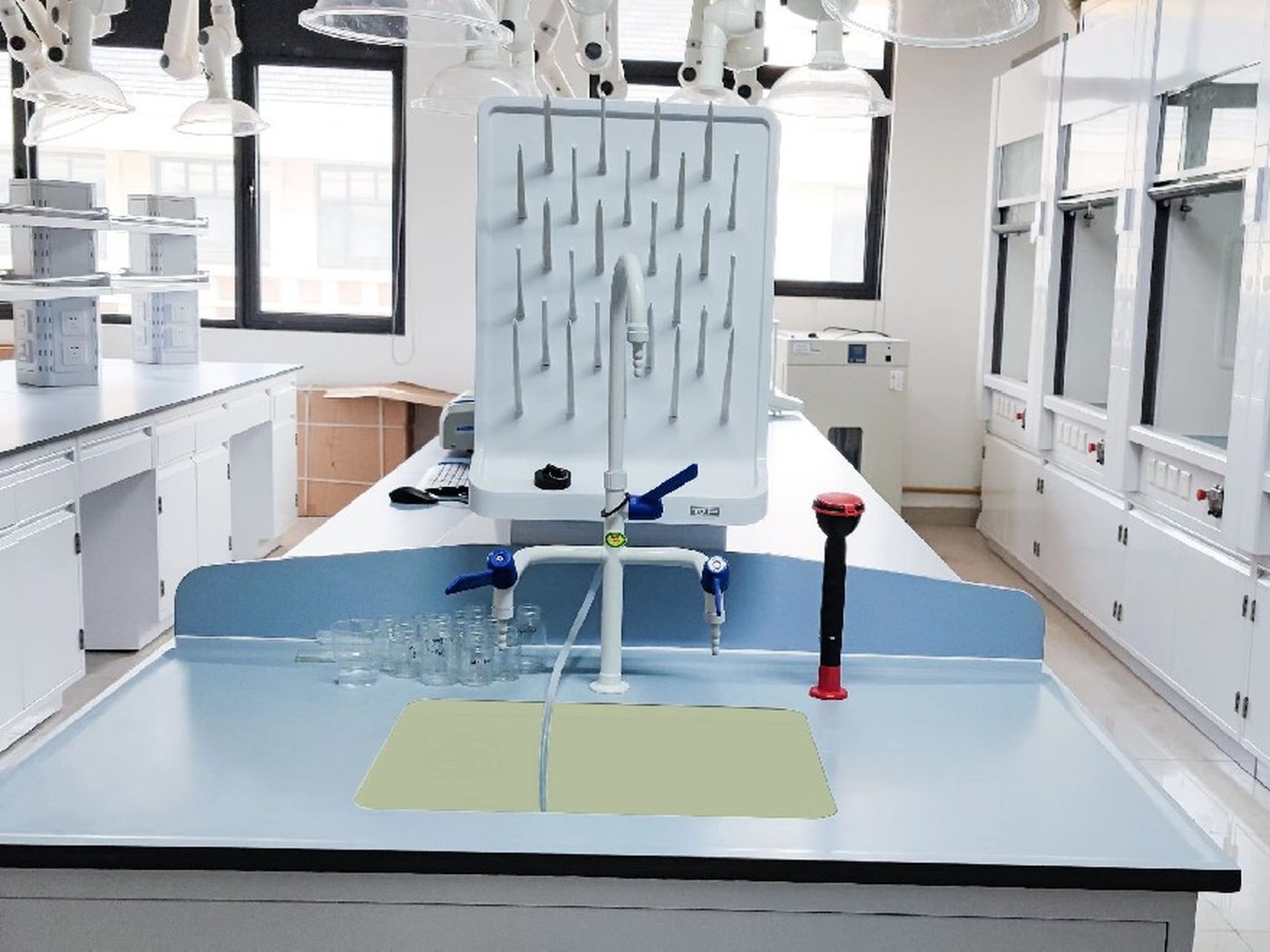
These are standard values; anything here can be changed to suit your drawings, workload or local code. Equipment is normally specified together with the matching benches and extraction.
| Thickness | 20 mm ceramic slab |
|---|---|
| Resistance | High scratch and heat resistance; cleanable non-porous surface |
| Care | Chip-sensitive on impact; avoid dropping heavy items onto the edge |
| Cut-outs | Sink, tap and service openings cut to the drawing |
| Sizes | Cut to bench length and depth; joints per slab availability |
| Construction | Material and finish selected to the chemicals, washdown regime and project specification |
| Customisation | Dimensions, service positions and fittings adjusted to the project drawing |
| Packing | Knock-down or assembled, EPE foam, carton, plywood crate for sea freight |
It can chip or crack on heavy impact against the edge or a dropped heavy object; the layout should avoid point loads on unsupported edges.
Ceramic gives a chemical-resistant solid surface; stainless is chosen for sanitary washdown and structural table tops, not chemical resistance.
Ceramic slabs come in limited sizes; long benches are jointed with matched seams laid out on the drawing.
Send the room plan, equipment list and any chemical or process notes. You get back a schedule and a factory-direct price.
Send Your Drawings