
Benches that stand up to a full class every day: tough worktops, rounded edges, and services laid out so a teacher can see and reach every station.
A teaching bench takes more wear in a year than a research bench takes in a decade. We use durable worktops, round over the exposed edges, and keep the frame simple and strong. Gas, power and water are routed to each student position with the taps and sockets placed where young students can reach them safely. We build to the class size and the room drawing, including teacher demonstration benches to match.
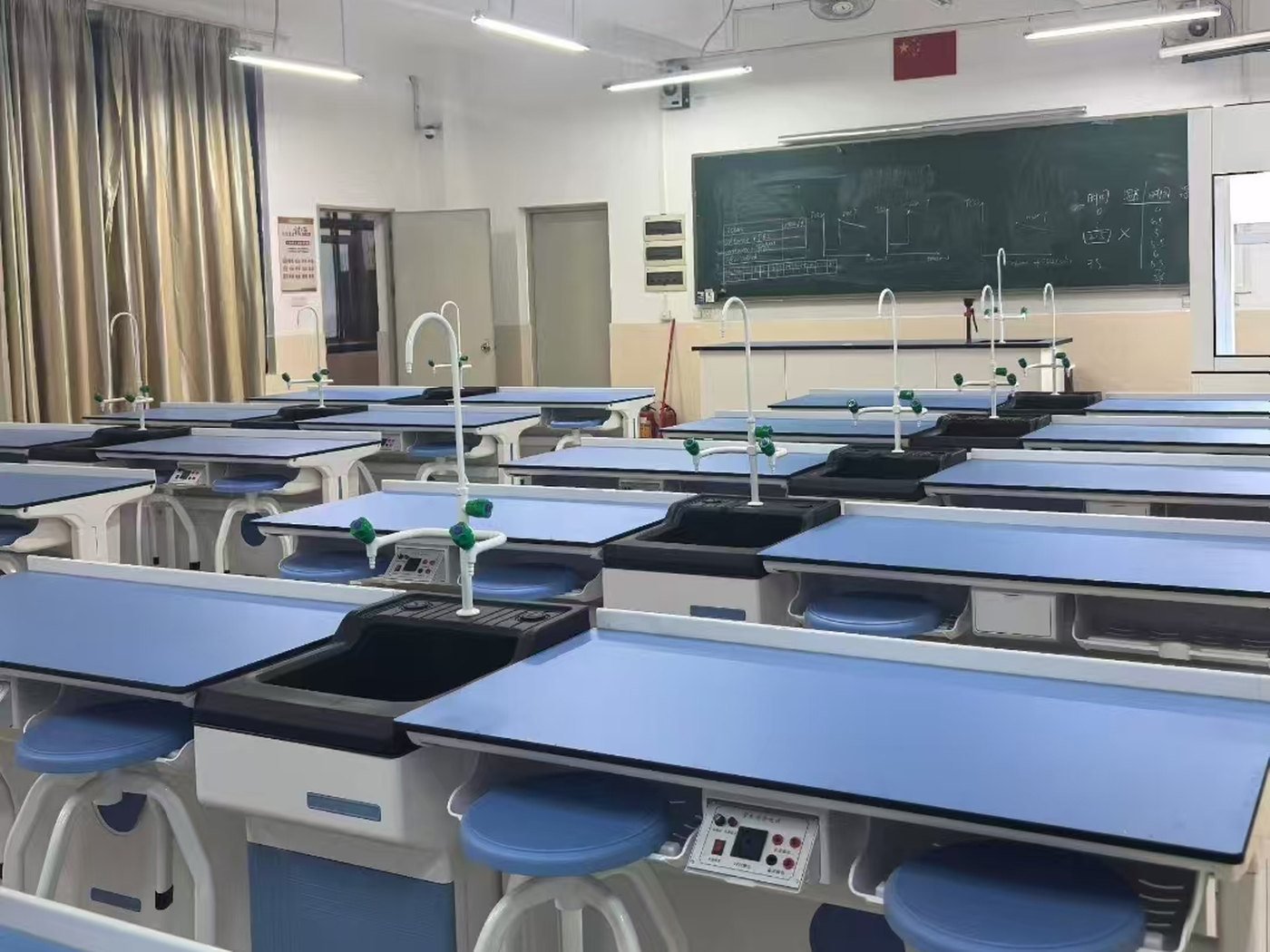
These are standard values; anything here can be changed to suit your drawings or local code. A bench run is usually specified with fume hoods and storage cabinets in the same finish.
| Worktop | 12.7/16 mm phenolic or 16 mm epoxy; chemical resistant |
|---|---|
| Edges | Rounded and sealed; no sharp exposed corners |
| Frame | Powder-coated steel tube; mobile option with castors |
| Services | Gas taps, power sockets, sinks per student position |
| Student positions | Layout to class size; typically 2–4 per module |
| Depth / height | 750 mm deep; height to suit age group |
| Finish | Any RAL colour; durable, cleanable surface |
| Packing | Knock-down, labelled by room and station |
Phenolic resin is the usual choice — it stands up to daily use and most school chemicals at a reasonable cost. For heavier chemistry we move up to epoxy.
Yes. Send the room plan and class size and we will issue a layout showing bench modules, student positions and the gas, water and power points for each.
Yes. We build a matching demonstration bench with the same finish and the services a teacher needs for front-of-class experiments.
Send a DWG, PDF or a photo with dimensions. You get shop drawings, a material schedule and a factory-direct price.
Send Your Drawings