A dedicated hood for perchloric acid and highly oxidative reagents, with wash-down capability and smooth acid-resistant interiors that stop perchlorate salts building up.
Perchloric acid vapors can form unstable crystalline salts on interior surfaces if not washed down, so this hood uses smooth, seamless PP or stainless interiors, a dedicated wash-down system and a dedicated exhaust that is not shared with general chemistry. It is specified wherever perchloric acid or strongly oxidizing reagents are heated or concentrated.
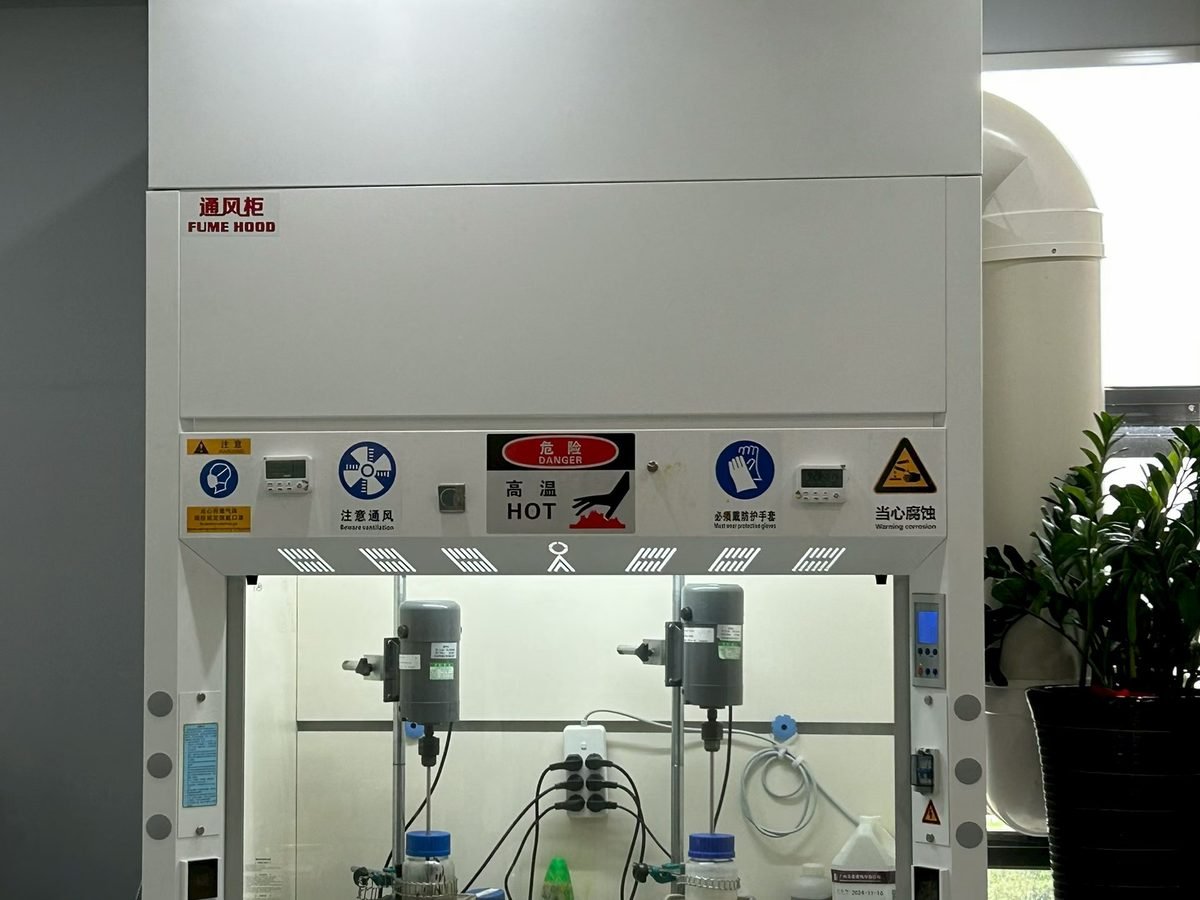
These are standard values; anything here can be changed to suit your drawings or local code. A hood run is usually specified with lab benches and storage cabinets in the same finish.
| Application | Perchloric acid, nitric and other oxidative reagent work |
|---|---|
| Interior | Seamless PP or stainless; wash-down spray rails and drain |
| Construction | Acid-resistant; no crevices where salts can accumulate |
| Sash | Tempered glass, counterweight balanced |
| Exhaust | Dedicated ducted fan and duct; ductless not recommended for perchloric |
| Airflow | Designed to specified face velocity; monitor and alarm standard |
| Services | Wash-down water, drain, light and power as specified |
| Packing | Knock-down, EPE foam, carton, plywood crate |
Perchlorate salts can crystallize on baffles, ducts and interior surfaces and become explosive if left uncleaned. A dedicated wash-down hood and separate exhaust prevent that buildup.
Yes. The perchloric hood should have its own fan and duct, kept separate from general chemistry extraction, and washed down on the schedule we specify.
A ductless filtered hood is not recommended for perchloric acid. This application needs dedicated ducted extraction and regular wash-down cleaning.
Send the room plan and the work done at the bench. You get back a hood schedule with sash width, liner, airflow and a factory-direct price.
Send Your Drawings